
Business concerns and repeat hotspots
Bring together reported ASB, theft, criminal damage and staff concerns. Look at the locations, times and patterns affecting businesses, visitors and residents.
BIDS · COUNCILS · BUSINESSES · PROPERTY OWNERS
For councils, BIDs and place partnerships: turn boarded-up frontages, recurring anti-social behaviour and public realm concerns into costed high street improvements that can be commissioned and delivered.
Discuss your siteBREAK-INS · VACANT PROPERTY · DETERIORATING BOARDING
For police, councils, landlords and property owners. A site survey is required. Ask about a 24- or 48-hour target for initial securing works agreed after the survey, followed by a separately scoped frontage treatment.
Replace a short-term patch with a clear security, presentation and upkeep plan. Suitable for owners managing a property remotely and teams tackling neglected frontages.
Rapid property securing ↗The survey comes before confirmation of scope, quotation, access, availability and the accepted completion target.
THE CHALLENGE
Shopfronts, rear access routes, delivery areas, vacant units and the spaces between businesses can face different problems at different times of day. A review connects business and community concerns with the physical environment, existing measures and the people responsible for taking action.
WHAT THE REVIEW COVERS
Bring together reported ASB, theft, criminal damage and staff concerns. Look at the locations, times and patterns affecting businesses, visitors and residents.
Review entrances, service alleys, delivery areas, vacant frontages and insecure boundaries. Identify proportionate options for gates, fencing, locks and access management.
Assess visibility, camera coverage, reporting routes, seating, planting and upkeep. Consider lighting, environmental improvements and suitable bollards or barriers where needed, with specialist advice and permissions.
Agree how BIDs, councils, landlords, businesses, police and community partners can coordinate reporting, maintenance and delivery, including daytime and evening use.
FROM FINDINGS TO ACTION
A prioritised high street action plan with clear responsibilities, indicative costs and a route to delivery. Start with one problem location or a defined stretch of street, then choose the support you need to move from recommendations to completed improvements.
Each project is quoted to an agreed scope. We confirm fees before work begins. Materials and installation are quoted separately by suppliers.
Agree the priority stretch of high street, review available evidence and walk the location with those who use and manage it.
Develop immediate actions and investment options, considering accessibility, permissions, maintenance, indicative costs and the risk of moving problems elsewhere.
Help specify agreed improvements, obtain supplier quotations and oversee implementation. Agree measures to review incidents, business feedback and perceptions of safety.
SaferPlace360 draws on leadership of six Home Office Safer Streets programmes and £5.5m of government investment across policing, councils, housing providers and communities. Read about the experience ↗
Professional experience underpinning SaferPlace360 services.FOR LOCAL AUTHORITIES AND NEIGHBOURHOOD BOARDS
In September 2026, the government announced a £210 million package for high streets, including a £125 million Derelict Buildings Fund intended to support local authorities in bringing vacant buildings back into use. The Pride in Place Programme also lists regeneration of high streets, shopfront design and public realm improvements among its indicative interventions. Funding routes and eligibility depend on the programme and place.
We can help a council or neighbourhood partnership define the problem, assess a priority frontage or stretch of street, develop proportionate options and cost the work. The result is a clear basis for a business case, procurement and delivery, with measures to review the effect on the place.
Programme information: government announcement, 25 September 2026 and Pride in Place indicative interventions.
Discuss a high street projectHIGH STREETS · THE CHALLENGE
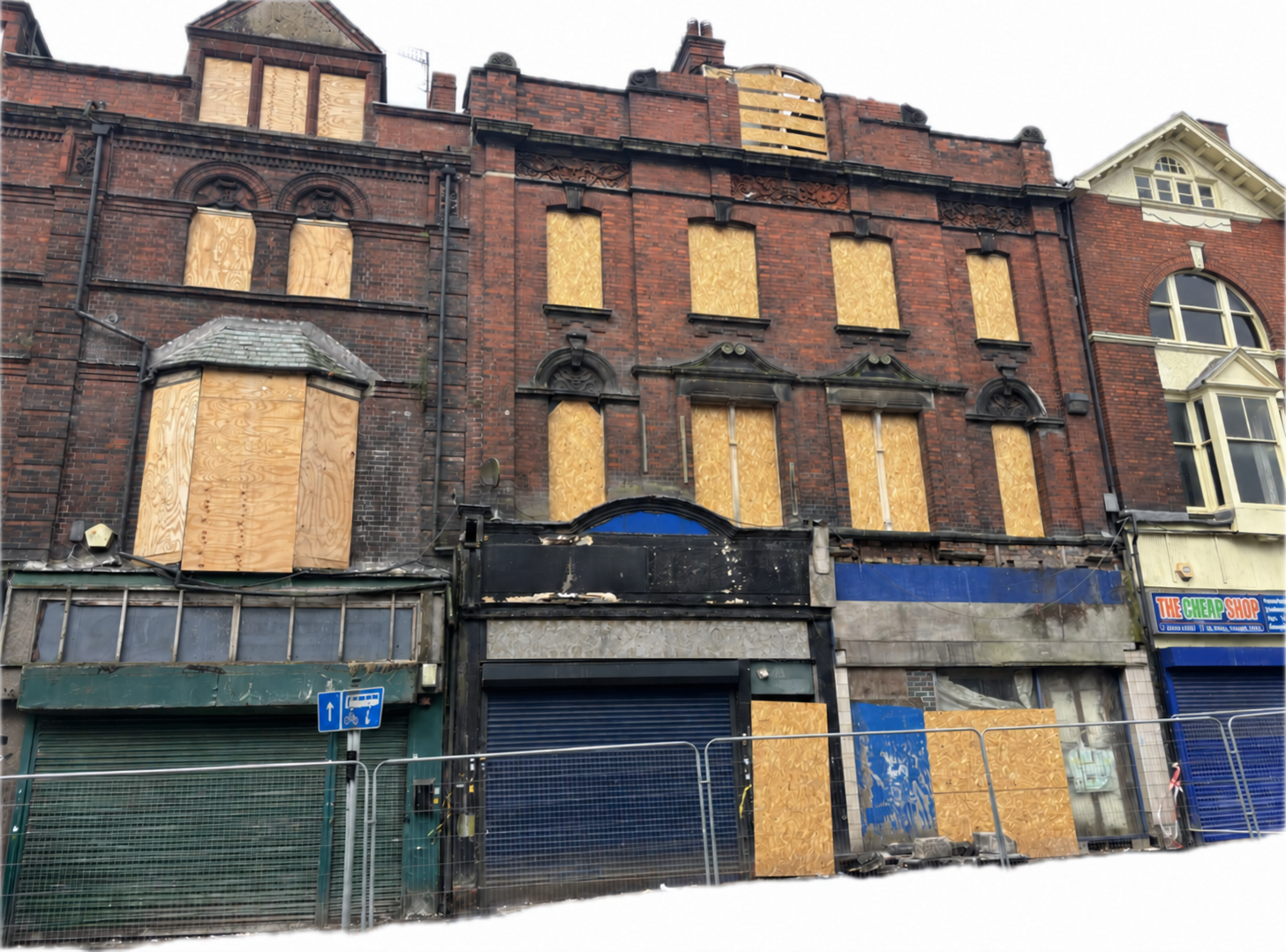
When a commercial building stands empty and boarded up, the effect can spread beyond that address. Broken windows, graffiti and poor upkeep can make a street feel neglected. Nearby traders may feel the impact if visitors choose to avoid that stretch of the high street.
Where the condition of land or buildings adversely affects the amenity of an area, a council may serve a Section 215 notice under the Town and Country Planning Act 1990. The notice requires the owner or occupier to take specified steps within a set period. A notice can prompt an owner to act; where its requirements are not met, the council may prosecute or carry out the required works and seek to recover its costs. Those processes can take time while the appearance of the street continues to suffer.
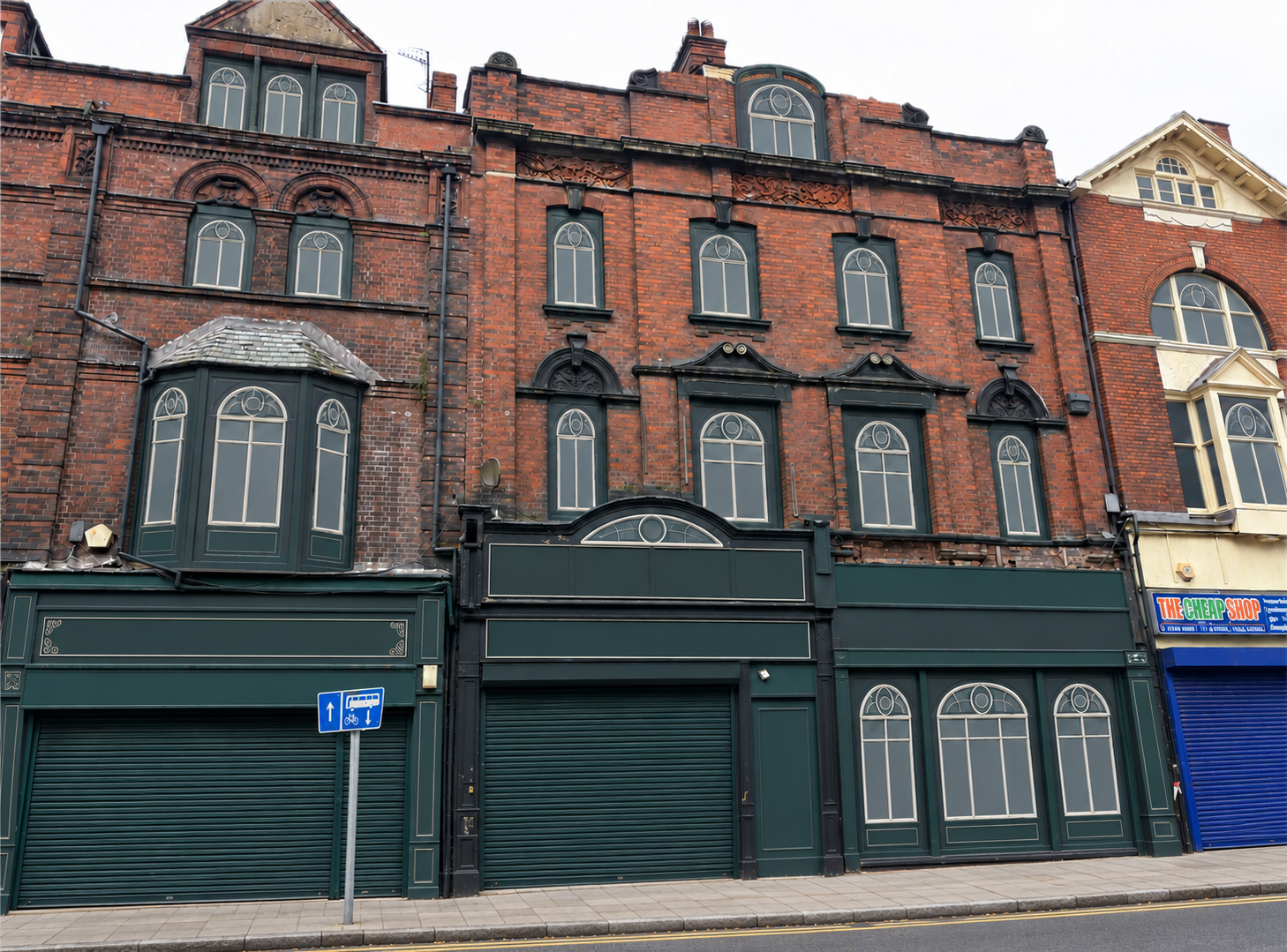
Boarding can be an essential immediate step to secure a vulnerable building, but plain sheets can leave a prominent frontage looking abandoned. A coordinated interim treatment, such as heritage-sensitive printed panels, repaired openings and cleaned shutters, can improve the street scene while longer-term action is pursued. Any work should be agreed with the relevant council teams, obtain necessary consents and meet the requirements of an existing notice. A more welcoming frontage can help restore confidence for visitors, neighbouring businesses and potential investors.
Section 215 guidance · UK government guidance
HIGH STREET · BEFORE
Vacant and boarded-up buildings can affect how a street looks and feels. This photograph records the condition of one frontage before improvement; the review would consider the building alongside nearby routes, trading activity, maintenance and other local evidence.
READY TO TALK?
Share the location, the concern and the outcome you need. We will suggest a sensible first step.
Make an enquiry